Room-temperature logic
The computational core needs no cryostat. Only our single-photon detectors sit cold, in a fridge the size of a filing cabinet, which means racks of Aurora processors fit in an ordinary data hall.
Photonic quantum computing · Boulder, Colorado
Helios Quantum builds photonic quantum processors that run at room temperature and scale on the same fabric as the internet itself. Aurora-3, our 1,216-mode machine, is live in the cloud today.
Aurora-3 online Queue depth 3 circuits Squeezing 15.2 dB Photon loss 0.04 dB/cm
The Machine
No dilution refrigerator wrapping the logic. No microwave lines. Aurora-3 encodes information in squeezed states of light, routes it through silicon nitride waveguides thinner than a wavelength, and reads it out with superconducting nanowire detectors. The chip itself sits at room temperature, humming along at the speed limit of the universe.
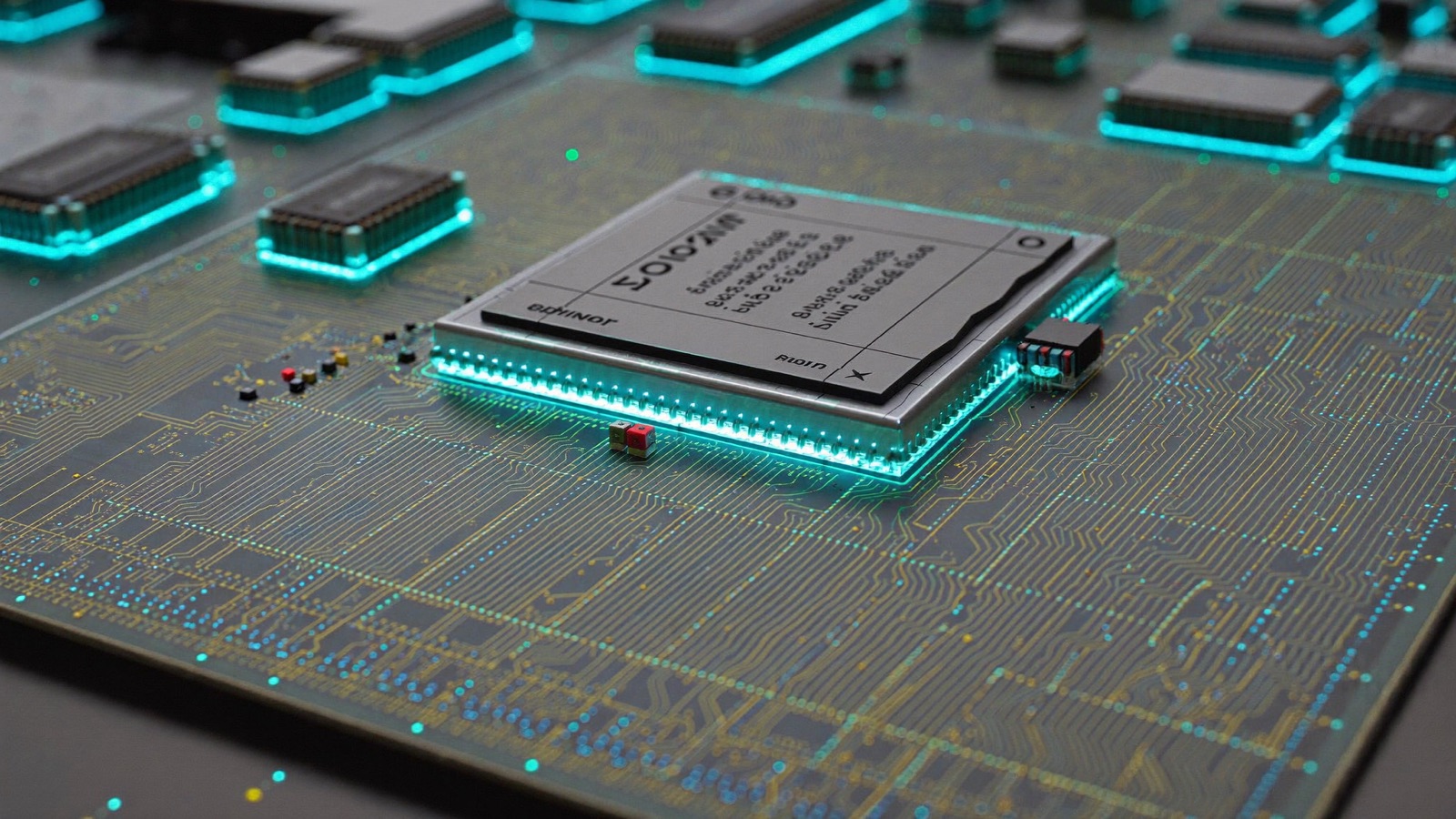
The computational core needs no cryostat. Only our single-photon detectors sit cold, in a fridge the size of a filing cabinet, which means racks of Aurora processors fit in an ordinary data hall.
Our photons live at 1,550 nanometers, the same wavelength the world's fiber already carries. Entanglement distributes between modules over standard optical fiber, so the machine scales by plugging in more of it.
Small entangled resource states fuse into a fault-tolerant lattice on the fly. Losing a photon costs a measurement, not the computation, and the error correction is baked into the architecture itself.
Hold a qubit
Every computation on Aurora-3 begins here: a single mode of light placed between answers. Tap the sphere to rotate this qubit from a definite zero into an equal superposition, both outcomes at once, waiting for a measurement to make up its mind.
State: |0⟩Click or tap the sphere to apply a Hadamard gate.
Research
Aurora exists because our team keeps asking light harder questions. Recent preprints from the Boulder lab, free to read and reproduce.
arXiv:2603.04117 [quant-ph]
We demonstrate a full round of fusion-based quantum error correction across all 1,216 modes of Aurora-3, achieving a logical error rate of 1.1e-4 per cycle and showing suppression consistent with threshold behavior as lattice distance grows from 3 to 7.
arXiv:2511.08834 [physics.optics]
A periodically poled TFLN waveguide source produces 15.2 dB of measured squeezing at 1,550 nm with no cryogenics, a record for integrated photonics. We detail the loss budget that made the last two decibels possible.
arXiv:2409.12951 [quant-ph]
Using 4.2 km of installed fiber between two Boulder buildings, we teleport entangling gates between separate photonic modules with 94.6% fidelity, and derive the loss thresholds under which multi-building quantum data centers become practical.
Cloud Access
Submit circuits through our Python SDK or REST API and Aurora-3 returns shot data in minutes. Start free on the simulator, graduate to hardware when your algorithm is ready.
For students and the curious
$0 / month
Most popular
For research groups and startups
$890 / month
For enterprises and national labs
Custom